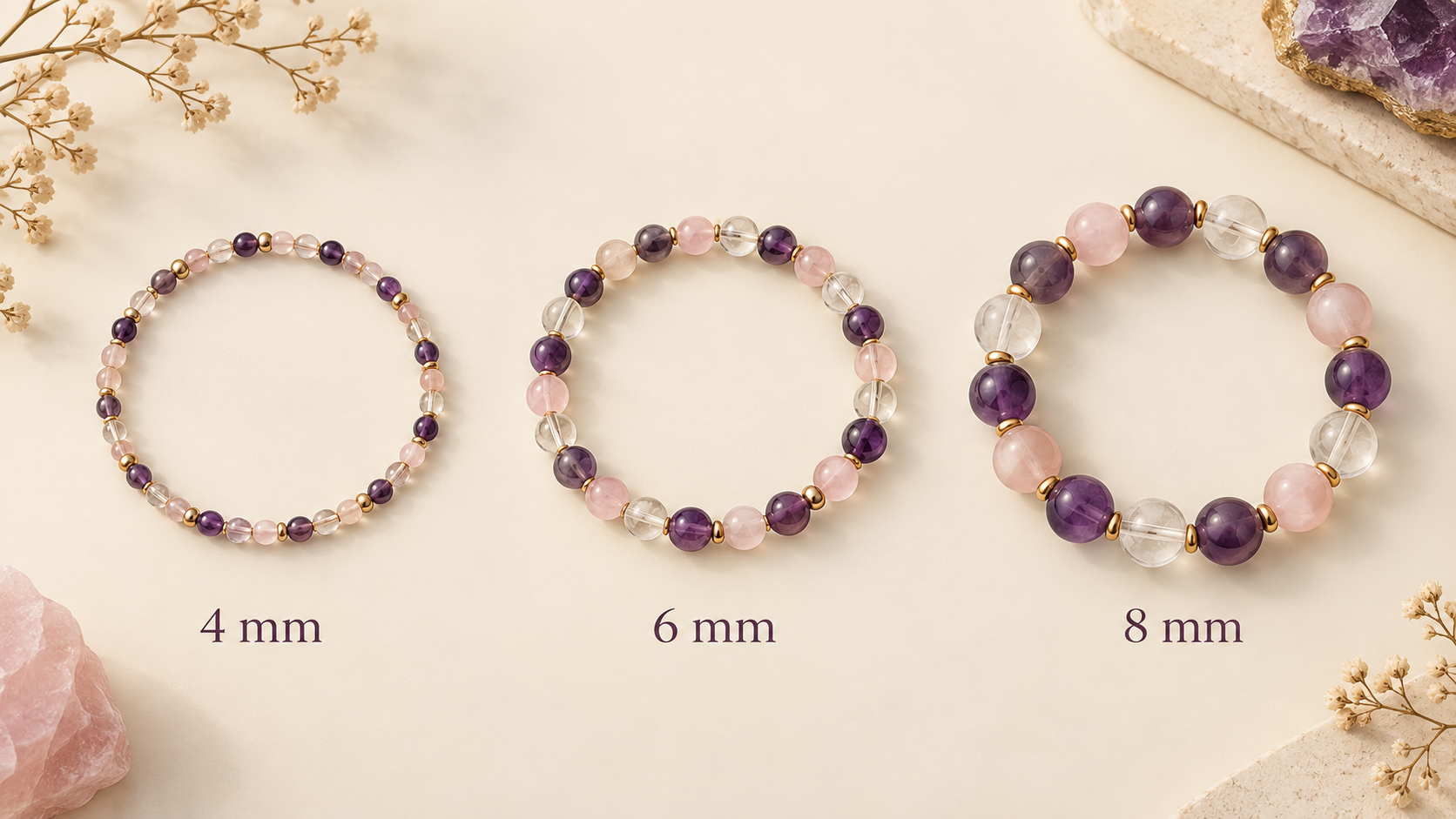
Bead size changes more than the scale of a gemstone bracelet. It changes the rhythm of the design, how much color you notice, and the kind of presence the bracelet brings to your wrist. A 4mm bracelet can feel delicate and detailed. A 6mm bracelet often lands in a balanced middle ground. An 8mm bracelet makes each stone easier to see and gives the finished piece more visual weight.
There is no single “right” size. The best starting point depends on the look you enjoy, how you plan to wear the bracelet, and whether you want the stones to whisper, blend, or stand forward. This guide compares 4mm, 6mm, and 8mm beads so you can begin with a clear sense of what each size brings to a design.
At a Glance: 4mm vs 6mm vs 8mm
| Bead size | Overall look | Visual presence | Often works well for |
|---|---|---|---|
| 4mm | Fine, delicate, detailed | Light and subtle | Minimal looks, layering, intricate patterns |
| 6mm | Balanced, polished, versatile | Noticeable without feeling oversized | Everyday wear, first designs, single or stacked bracelets |
| 8mm | Bold, sculptural, stone-forward | Strong and substantial | Statement designs, visible texture, showcasing individual stones |
These descriptions are visual guides, not fixed rules. Stone color, translucency, finish, spacers, charms, and the number of beads can all change how a finished bracelet appears.
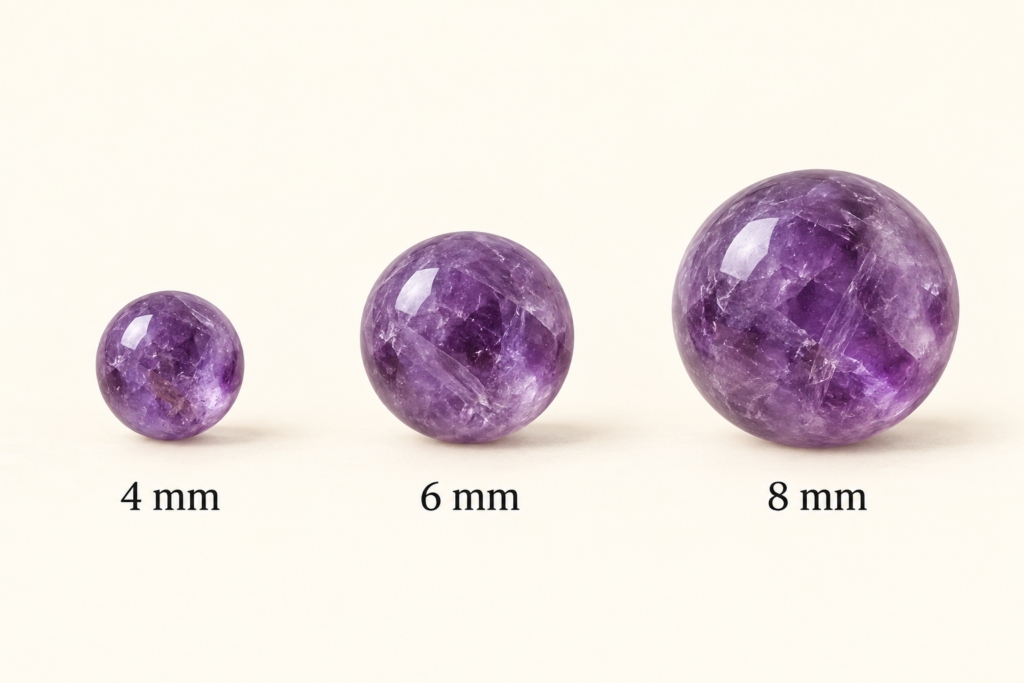
What Does a 4mm Bracelet Look Like?
A 4mm bead is small enough to create a refined, finely paced design. From a distance, the bracelet may read as a slim line of color. Up close, the individual stones and the transitions between them become part of the detail.
This size is a natural choice when you prefer jewelry that sits quietly beside the rest of your look. It can pair easily with a watch, a fine chain bracelet, or other gemstone strands without becoming the visual center of the stack. Because smaller beads allow more individual pieces around the bracelet, they can also support nuanced color patterns, repeated sequences, and gradual shifts between stones.
The smaller scale does not mean the design has to feel plain. A contrasting spacer, a single larger focal bead, or a carefully placed charm can create definition without losing the lightness of the overall piece. If you enjoy subtle jewelry or want a bracelet that invites a closer look, 4mm is a thoughtful place to begin.
Why 6mm Is a Versatile Starting Point
Six-millimeter beads sit between delicate and bold, which makes them an easy size to imagine in many different designs. Each stone is visible enough for its color and surface to register, while the bracelet can still feel streamlined on the wrist.
For a first custom bracelet, 6mm can be a useful starting point because it gives you room to explore without deciding immediately between a very fine or very substantial look. A simple run of one stone can feel clean and composed. A multistone pattern can feel expressive without becoming visually crowded. Spacers and connectors are noticeable, but they do not necessarily overpower the beads around them.
Six-millimeter beads also move comfortably between styling roles. Worn alone, the bracelet can feel complete. In a stack, it can act as the anchor between slimmer pieces and larger beads. If your taste changes from day to day—or you are designing a gift and are unsure whether the recipient prefers subtle or bold jewelry—6mm offers a balanced visual middle ground.
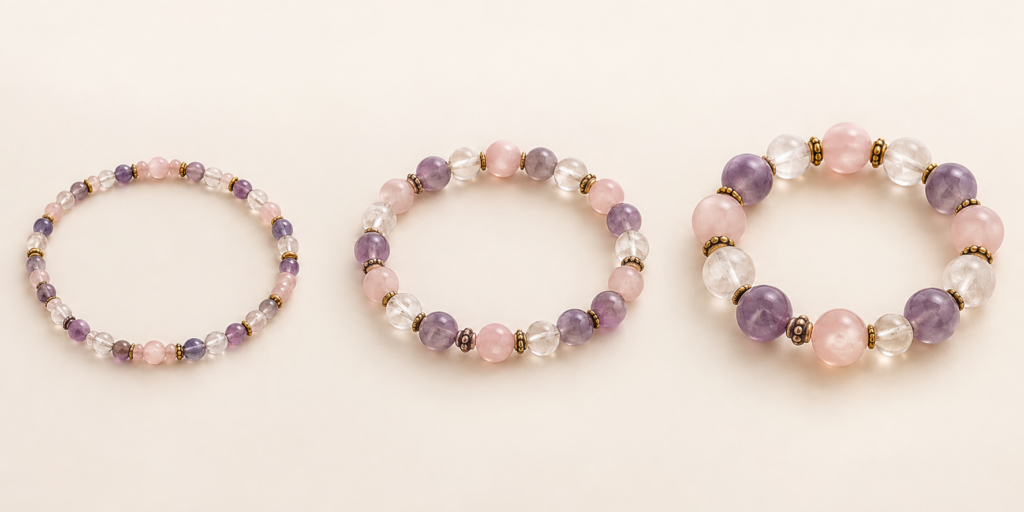
When 8mm Makes Sense
An 8mm bracelet gives the stones a stronger visual presence. The larger surface area makes color variation, banding, inclusions, translucency, and polish easier to notice. Instead of reading primarily as a line of color, the bracelet is more likely to read as a sequence of individual stones.
Choose 8mm when you want the bracelet to hold its own as a central accessory. It can be especially effective for a focused palette, a strong contrast between stones, or a design built around a clear focal point. Larger beads can also make a simple pattern feel intentional because each transition carries more visual weight.
That presence is a style choice, not a statement about who should wear it. An 8mm bracelet can look elegant, relaxed, graphic, or expressive depending on the stones and the surrounding details. It may also feel more noticeable on the wrist than a smaller-bead bracelet, so think about how much physical and visual presence you enjoy in everyday jewelry. If you like seeing the character of each stone at a glance, 8mm may be the right starting scale.
Can You Mix Bead Sizes?
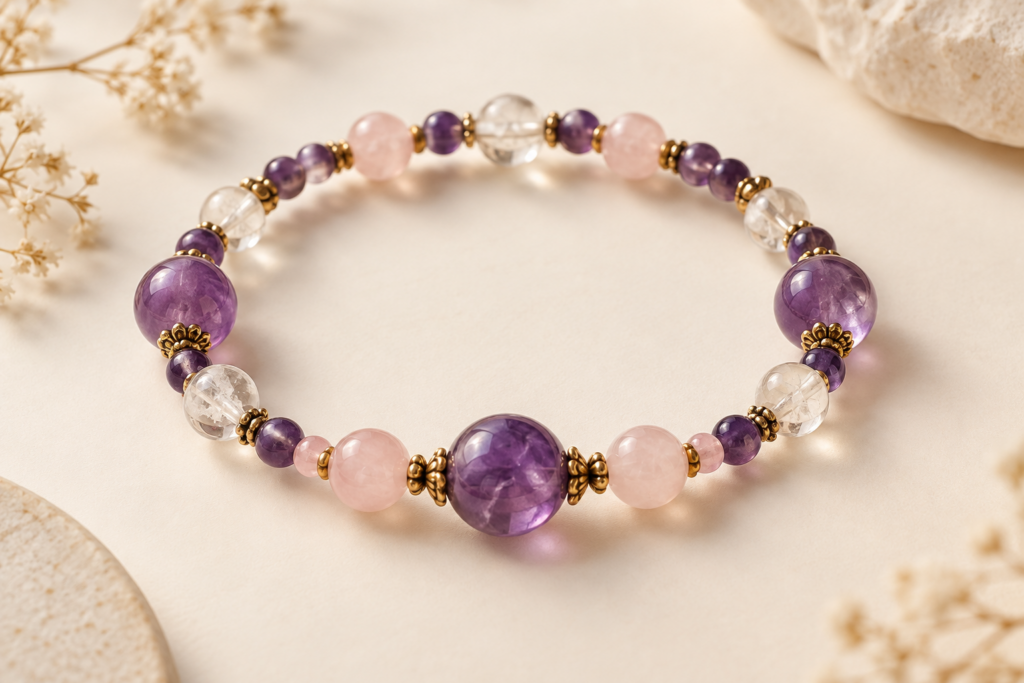
Yes. Mixing bead sizes can add rhythm and hierarchy to a bracelet, much like changing the size of type in a page layout. The key is to make the shifts feel intentional rather than accidental.
A 4mm and 6mm combination creates a gentle contrast. The smaller beads can frame a center section, separate color families, or bring a lighter transition around a focal detail. This pairing works well when you want variation while keeping the overall design refined.
A 6mm and 8mm combination creates a clearer change in emphasis. Six-millimeter beads can carry the main pattern while one or several 8mm beads mark a center, repeat at measured intervals, or give a favorite stone more room to be seen. Repetition helps the larger beads feel integrated into the design.
Using 4mm, 6mm, and 8mm together gives you the most range. One approach is to move gradually from small to large and back again. Another is to use 4mm beads as quiet separators, 6mm beads as the main body, and 8mm beads as focal points. You do not need perfect symmetry, but a repeated color, metal detail, or size sequence can help the bracelet feel connected.
The exact combinations available depend on the stones and components currently offered in the design studio. When a stone is available in more than one size, try swapping it in place before adding more colors. Sometimes changing scale alone is enough to give the design the contrast it needs.
Bead Size Is Not Wrist Size
A “6mm bracelet” describes the approximate diameter of the beads. It does not mean the bracelet is 6mm long, and it does not tell you the wrist measurement or finished inner circumference.
Fit is a separate decision. It is influenced by your wrist measurement, the bead diameters in the design, the number and shape of spacers or connectors, how the bracelet is constructed, and whether you prefer a closer or looser feel. Larger beads also occupy more space toward the inside of a circular bracelet, so a straight design length does not by itself establish the finished inner circumference or fit.
That is why Gem By Me asks for wrist information separately from bead selection. Start by measuring your wrist close to the skin where you plan to wear the bracelet, without adding extra length. Then choose your wear preference separately. The Size Guide explains how to record the wrist measurement without adding your own allowance. Those details help describe the intended fit; the bead size remains a design choice.
It is also helpful to keep proportion in mind. The same 6mm beads may look different on two wrists, but that does not make one proportion correct and the other incorrect. What matters is whether the scale feels aligned with the presence you want and whether the completed construction is reviewed for your measurement.
How to Choose Your Starting Size
If you are still deciding, begin with three practical questions.
1. How much presence do you want?
Picture the bracelet from arm’s length, not only in a close-up photograph. If you want a slim accent that blends easily with other jewelry, start with 4mm. If you want the bracelet to be clearly visible while staying balanced, try 6mm. If you want the stones themselves to lead the look, begin with 8mm.
2. Will you wear it alone or in a stack?
For a layered look, smaller beads can leave more visual space between pieces. A 6mm bracelet can bridge delicate and bold bracelets in the same stack. An 8mm bracelet can serve as the anchor, with slimmer pieces arranged around it. There is no rule that every bracelet in a stack must use the same size; contrast can make each one easier to appreciate.
3. Do you want a uniform or dimensional design?
A single bead size creates an even, continuous rhythm. Mixed sizes create emphasis and movement. If you already know which stone or detail you want to feature, choose a larger bead for that moment and build the surrounding scale around it. If you prefer calm repetition, keep one size consistent and let color or spacing provide the variation.
Your first choice does not lock the design. You can change every bead while designing. Where the selected materials offer those sizes, try a similar palette at another diameter, or replace a few beads to compare the proportion. Not every material is available in every size. The most useful comparison is often the one you can see in the context of your own design.
Start with the size that feels most like you—then make every stone your own.